
Cooking oils: cutting through the controversy
By Justine, Get Loose Team Member and Chris Cheyette, Registered Dietitian & Get Loose Volunteer
If you’ve spent any time on social media lately, you may have seen the panic about “seed oils.” They are accused of driving inflammation, heart disease and almost every modern ill, and we’re told to throw them out of the kitchen. As a member of the Get Loose team who answers your questions, and a dietitian who reads the trial data, we wanted to take a calm look at the three oils we sell at Get Loose: organic high-oleic sunflower oil, cold-pressed rapeseed oil, and Zoi regenerative cold pressed olive oil.
What the science says about seed oils
The “seed oils are toxic” story rests on the idea that omega-6 linoleic acid promotes inflammation in the body. The current evidence doesn’t back this up. A 2025 review from the Johns Hopkins Bloomberg School of Public Health concluded that linoleic acid intake from seed oils does not raise inflammatory biomarkers or chronic disease risk [1]. A separate 2025 analysis of nearly 1,900 adults found that higher blood levels of linoleic acid were associated with lower inflammation and better cardiometabolic markers [2]. The British Heart Foundation, the American Heart Association and the British Dietetic Association are all aligned on this: home-cooking with these oils is not something to fear [3].
What is worth worrying about is the company seed oils often keep. Industrially fried fast food and ultra-processed snacks are linked to poor health, but that’s about the salt, sugar, refined carbs and frequency, not the oil on its own.
The three main oils we stock
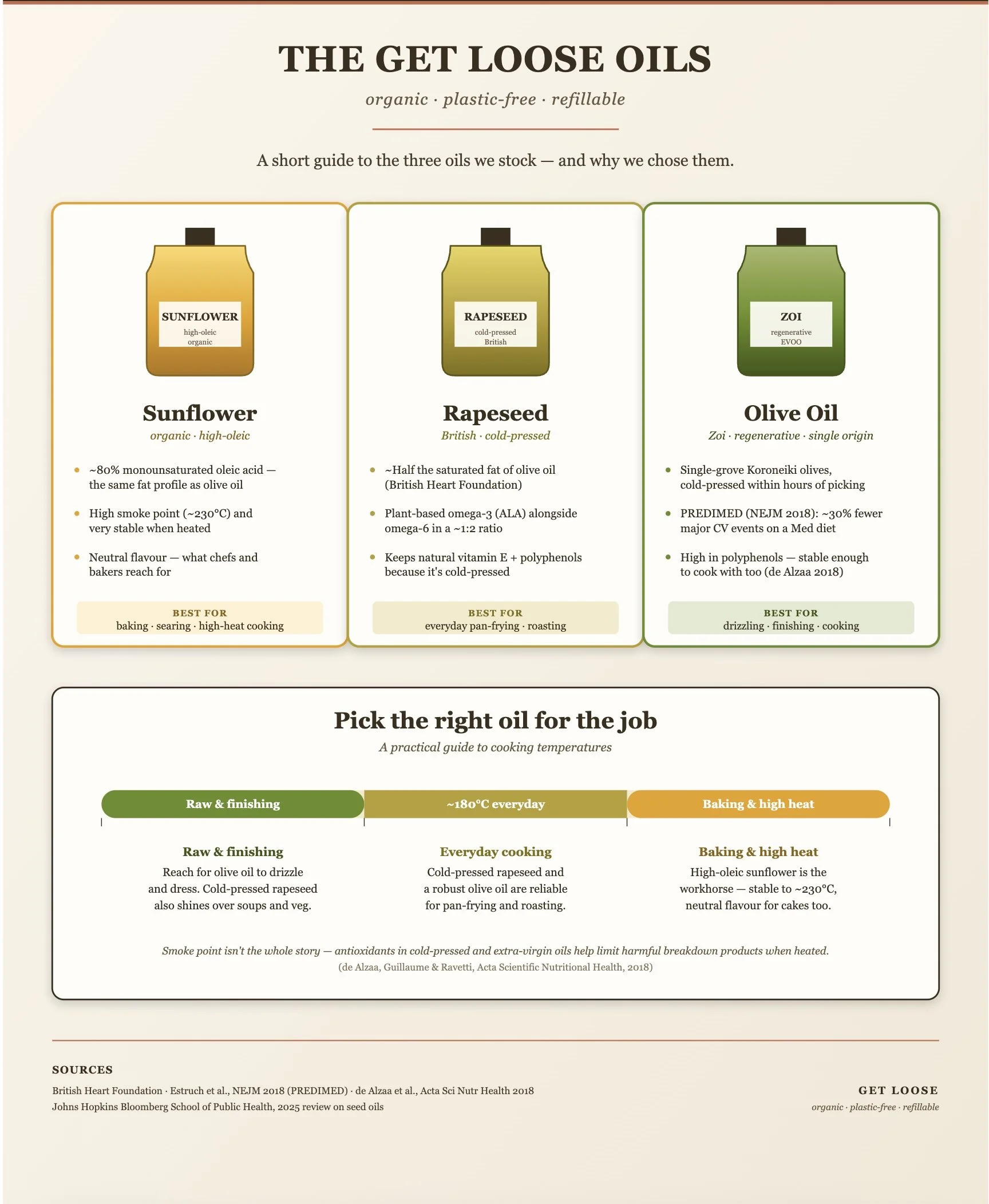
Organic high-oleic sunflower oil is our heat stable workhorse. Unlike standard sunflower oil, which is dominated by polyunsaturated linoleic acid, high-oleic varieties have been naturally bred to be roughly 80% monounsaturated oleic acid. The same fat that gives olive oil its heart-friendly reputation. That makes it very stable at high temperatures, with a smoke point around 230°C, while keeping a clean, neutral flavour. It’s the oil chefs and bakers reach for when they want consistent texture in cakes and pastries, or even browning when searing, without any taste of the oil itself coming through. It also retains a useful amount of vitamin E (alpha-tocopherol) [4].
Cold-pressed rapeseed oil is our everyday cooking oil. According to the British Heart Foundation, rapeseed oil contains roughly half the saturated fat of olive oil, and it’s the most widely available plant oil that supplies a useful amount of plant-based omega-3 (alpha-linolenic acid) alongside omega-6, in a roughly 1:2 ratio [3]. Because ours is cold-pressed, it keeps more of its natural vitamin E and plant polyphenols than the refined supermarket version, with the warm, slightly nutty flavour that comes with that.
Our Rapeseed oil is a non organic exemption because we wanted to sell a British one at a reasonable price. There are very few UK organic certified rapeseed oils due to weed and fertility issues in UK soil.
Regenerative Cold Pressed Olive oil single-grove, single-variety Koroneiki. From Europe's first regenerative-certified olive oil grove. Cold-pressed at 27°C within hours of picking, with a nod to the oleocanthal that gives a fresh EVOO its peppery throat-tickle. This type of oil has decades of human-trial evidence behind it. The PREDIMED trial (Estruch et al., New England Journal of Medicine, 2018) followed 7,447 adults at high cardiovascular risk and found that a Mediterranean diet supplemented with extra-virgin olive oil reduced the rate of major cardiovascular events by around 30% compared with a low-fat control diet [5]. Use it generously on salads, vegetables, beans and bread — and don’t be afraid to cook with it at moderate heat either.
A sensible guide to cooking temperatures
Each of our oils has a sweet spot. Here’s how we use them in our own kitchen:
Raw, dressings and finishing: a good olive oil is hard to beat. Cold-pressed rapeseed also works beautifully drizzled over soups or roasted vegetables.
Everyday pan-frying and roasting (around 180°C): cold-pressed rapeseed or a robust olive oil. A 2018 study in Acta Scientific Nutritional Health (de Alzaa et al.) found extra-virgin olive oil produced fewer harmful polar compounds and aldehydes when heated than several common refined oils, thanks to its natural antioxidants — a useful reminder that smoke point alone isn’t the whole story [6].
Baking, searing and high-heat cooking: high-oleic sunflower oil. Its monounsaturated profile, 230°C smoke point and neutral flavour make it the obvious choice for cakes, pastries, browning meat or anything you don’t want to taste the oil in.
The bottom line
Real food, cooked at home, with a good oil chosen to suit the job is not the problem the internet wants it to be. The three on our shelves cover almost everything most home cooks do: high-oleic sunflower for baking and high heat, cold-pressed rapeseed for everyday cooking and a useful dose of plant based omega 3, and Zoi olive oil for both the taste and the human-trial evidence behind it.
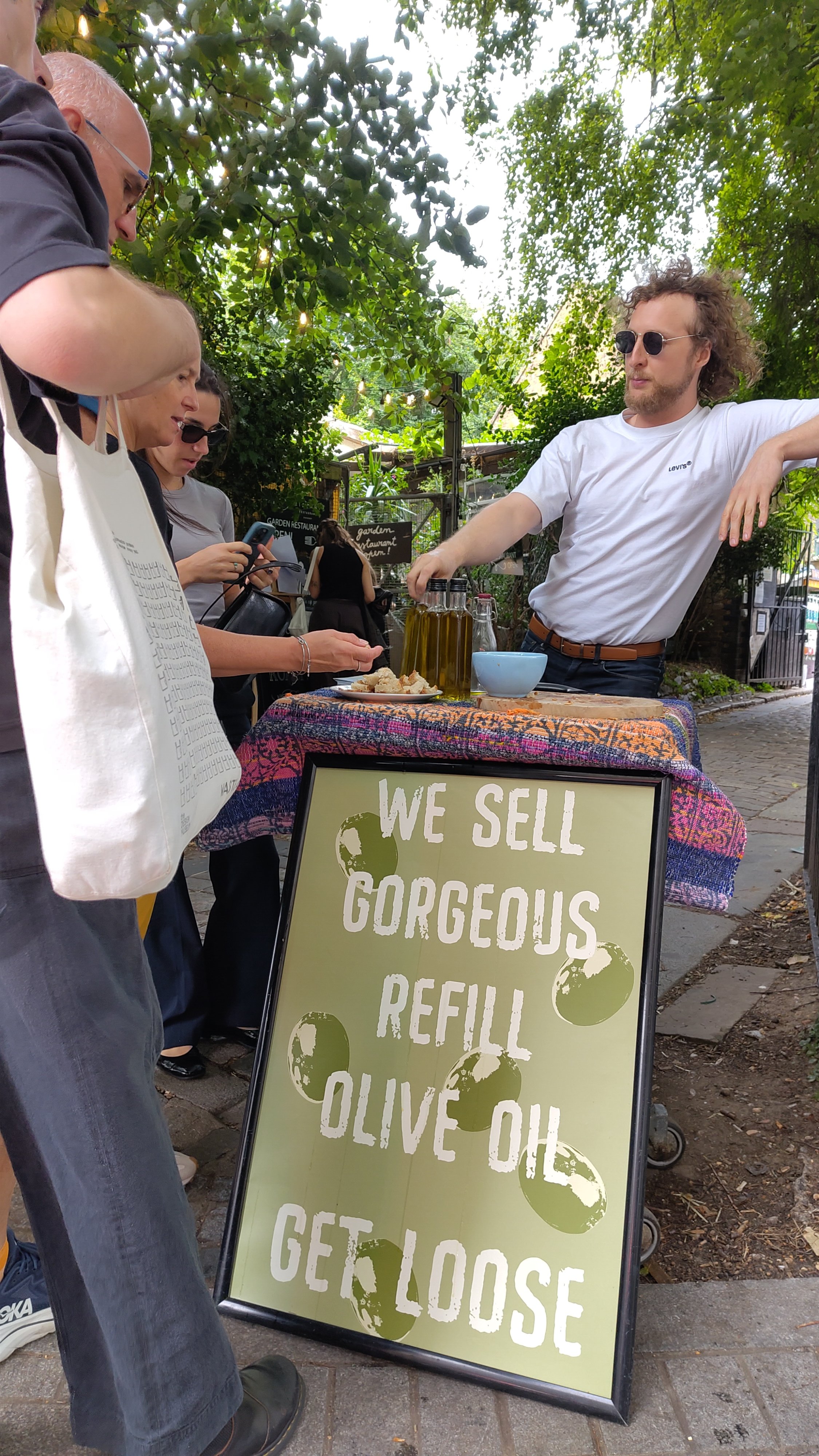
Pop into the shop with your own bottles and refill all three. They don’t have to be empty. Just remember to weigh before you fill. Want to try a small amount? You don't have to fill your bottle, just buy what you need.
Don’t have a bottle? We have new bottles to buy, and free used ones (washed).
References
Johns Hopkins Bloomberg School of Public Health. The Evidence Behind Seed Oils’ Health Effects (2025).
ScienceDaily. Myth-busting study shows controversial seed oils reduce inflammation (June 2025), reporting on a study of ~1,900 adults linking higher linoleic acid to lower inflammatory markers.
British Heart Foundation. Is rapeseed oil healthy? and Using oils in cooking: which oil is the healthiest?.
MDPI Agriculture (2024). Nutritional, Utility, and Sensory Quality and Safety of Sunflower Oil on the Central European Market — includes fatty-acid and tocopherol composition of high-oleic sunflower oil.
Estruch R, Ros E, Salas-Salvadó J, et al. Primary Prevention of Cardiovascular Disease with a Mediterranean Diet Supplemented with Extra-Virgin Olive Oil or Nuts. N Engl J Med 2018;378:e34. Open access link.
de Alzaa F, Guillaume C, Ravetti L. Evaluation of Chemical and Physical Changes in Different Commercial Oils during Heating. Acta Scientific Nutritional Health 2018;2(6):2–11. PDF.